
The case for having a business KPI dashboard is obvious—at least in theory.
Think of it this way: you wouldn’t start a long drive without a working speedo, fuel gauge, or satnav. Or if you did there’d be a higher risk of getting fined, stranded or lost.

Why would you try to drive a business without knowing if you were growing too fast, running out of cashflow, or heading down strategic blind alleys?
Whether you call them Key Performance Indicators, Business Metrics, Critical Success Factors or just ‘numbers that matter’ – having a dashboard of the right measures plays a big part in keeping you on the straight and narrow.
Once you’ve made the decision to try this, you’ll want to get it as close to right as soon as you can.
Here are five common mistakes – and how to avoid them.
Mistake #1: Not starting with a Great Question
A KPI is more than a number. It’s the answer to a question that really matters.
Most people start with numbers because that’s the obvious place to start. But you probably won’t feel compelled to update and review the finished dashboard.
Start here instead:
Ask yourself “What are my biggest concerns?”
Great KPIs are the answer to your most important, pressing valuable questions:

- Do we get an RoI on our marketing? And which marketing channel is best – and worst?
- Are we converting our fair share of sales opportunities?
- Could we be looking after our customers better?
- Are we being productive or just busy?
- Are we spending too much money on overheads?
- Are we a great business to work for?
This is very much in the spirit of Start with Why by Simon Sinek—even if applied slightly differently here.
Write the questions down first.
This process alone will clarify what really matters for you individually.
If you want to go deeper on this thinking, Measure What Matters by John Doerr is well worth your time.
Key point: If you ask a boring question → you’ll get a boring number → which won’t lead to action.
Help if you need it: I can send you a comprehensive list of every KPI our clients have tracked and found useful.
Mistake #2: Focusing on “plain” numbers
Revenue and profit (the numbers that most business owners are most focussed on) are not KPIs. They’re outcomes.
On their own, they tell you nothing about what’s likely to happen to the business in the future.
Take this example:
Revenue: £643k £714k £799k
Gross Profits: £343k £391k £441k
Net profits: £119k £125k £129k
Looks healthy.
Now look again:
Revenue: £643k £714k (+11%) £799k (+11%)
Gross Profits: 53% 54% 55%
Net Profits: 18.5% 17.5% 16.1%
Now the picture changes.
- Sales are growing steadily
- Margins at product level are improving
- But overall profitability is declining
That tells you something important: costs are creeping up more than the growth rate.
Without ratios and percentages, you wouldn’t see it coming as clearly.
Key point: Use percentages, ratios, and averages. That’s where you’ll find the insights.
Mistake #3: Tracking too many numbers
If your dashboard has 20+ numbers, it has low-to-no value.
You’re not after a jumbo jet cockpit—you’re trying to make better decisions.
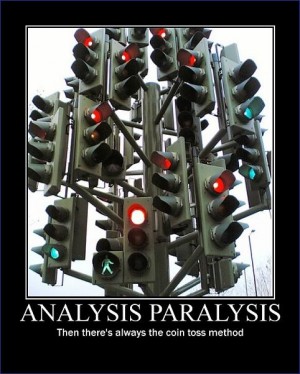
Most business owners already receive detailed financial reports. The problem is:
- They’re historical
- They’re dense
- They’re rarely used to guide action
A dashboard should do the opposite:
- Be current
- Clarify trends
- Be usable at a glance
Start with 5 KPIs. At most.
Only expand once you’re confident they’re helping you think and act better.
Cap it at 10–12 at most.
Key point: The main thing is to keep the main thing the main thing.
Mistake #4: Forgetting the law of unintended consequences
There’s a famous (quite possible apocryphal) story from India.

The Governor of Delhi became frustrated by the proliferation of dangerous snakes. He placed a bounty on cobra heads – and for a while it worked. Then, people started breeding cobras to claim the reward. When this came to light, the scheme was scrapped – and the breeding snakes were released.
The same thing can happen in business.
- Incentivise number of sales → people chase low-value deals
- Measure speed → quality drops
- Focus on efficiency → morale suffers
KPIs don’t just measure behaviour—they shape it.
So always ask:
What could go wrong if we optimise for this?
Then balance it.
- Track revenue and margin
- Track efficiency and customer satisfaction
- Track output and team wellbeing
Key point: Every KPI needs a counterbalance.
Mistake #5: Not linking KPIs to targets
A KPI without a target is just a number floating in the wind.
To make it useful, you need context:
- A target
- A timeframe
- A clear visual signal
Let’s say your sales conversion rate is 25%, but you feel it should be at least 33%.
That gap represents significant lost revenue.
If you define this, you might decide that:
- Green = 33%+
- Amber = 28–32%
- Red ≤ 27%
This simple RAG (Red/Amber/Green) system transforms how you read your dashboard.
Instead of analysing dozens of data points, you instantly see:
- What’s working
- Which number is a flashing red warning sign
- And therefore where to focus your time
And that’s the real goal.
Key point: Make performance easy to see.
Final Thoughts
Most businesses don’t lack data. They lack clarity.
A bad KPI gets ignored.
A good KPI highlights something important.
A great KPI changes what you do next.
Start small:
- Pick 5 or fewer numbers that answer a question that really matters to you
- Express them clearly – as a percentage, ratio or average
- Set clear targets – that you want to commit to
- Use R.A.G. to make the message obvious
- Make them visible
Then build from there.
Because when your numbers are right, your decisions get better—and everything else follows.
If you’d like to explore what needs to change to unlock the stage of development for you and your business, let’s talk.
Best regards, Tim
Want to discuss this for your business?
👉 Book your session at: Contact Us – Tim Brown – ActionCOACH – Let’s Have A Chat
Or call me direct on 07825 589333.